Speed Camera Alerts for Fuel Savings: The Complete Guide
Introduction
Speed camera alerts fuel savings are a practical way for daily commuters to cut fuel costs while staying compliant with traffic rules. By receiving real-time warnings about speed cameras, radar traps, and red-light zones, drivers can adjust their speed proactively, which translates into smoother acceleration, less braking, and lower engine load. This guide explains how those alerts work, how to combine them with eco-driving techniques, and which on-board tools make the most of every kilometre.
How Real-Time Speed Camera Alerts Improve Fuel Efficiency for Speed Camera Alerts Fuel Savings
Real-time speed camera alerts improve fuel efficiency by giving drivers the chance to maintain a steady speed before entering a monitored zone. Sudden speed changes force the engine to operate outside its optimal range, burning extra fuel for each burst of acceleration. When a warning appears a few hundred metres ahead, the driver can simply coast or modestly reduce throttle, keeping the engine in its most efficient band.
- Predictive braking: Knowing a camera is ahead lets you start braking earlier, using engine braking instead of full-force pedal pressure.
- Reduced idling: Many alerts also highlight congestion near camera clusters, prompting you to switch off the engine or shift to a lower gear instead of lingering in stop-and-go traffic.
- Consistent cruise control use: With confidence that you won’t be surprised by a hidden camera, you can rely on cruise control to hold the optimal speed, which is one of the most fuel-saving practices.
[!TIP] Keep the alert volume low enough to stay aware but not so loud that it encourages abrupt reactions. A gentle cue works best for smooth driving.
The Speed Camera & Radar app delivers GPS-based alerts for more than 100 countries, ensuring you receive timely warnings wherever you travel. Its smart speedometer shows the current speed relative to the posted limit, helping you stay within the sweet spot for fuel economy.
Optimizing Acceleration and Braking with Camera Alerts for Speed Camera Alerts Fuel Savings
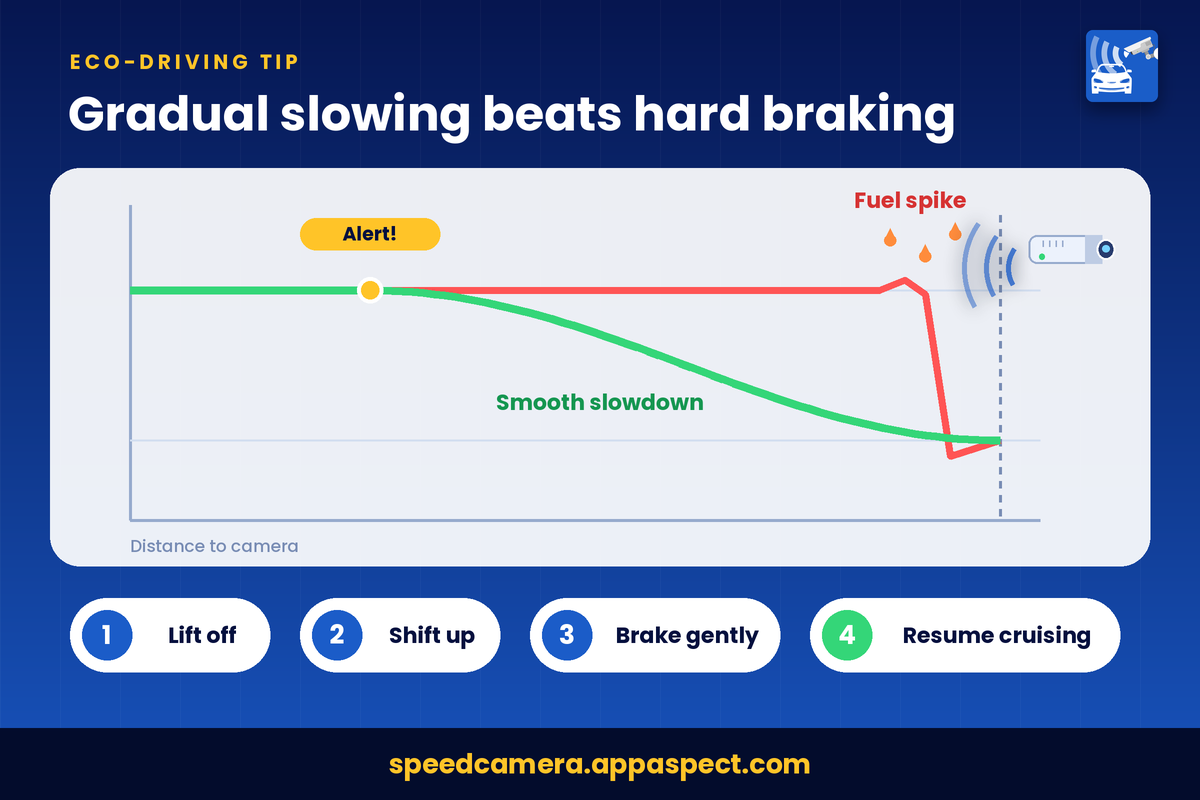
When a camera warning pops up, the immediate instinct is to slam the brakes, but the most fuel-friendly response is a gradual deceleration. Here’s how to turn a camera alert into an eco-driving moment:
- Lift off the throttle as soon as the alert appears. Let the vehicle’s momentum carry you forward while the engine load drops.
- Shift to a higher gear (if you drive a manual) or let the automatic transmission upshift early. Lower RPMs mean less fuel burned per kilometre.
- Apply gentle braking about 30-50 metres before the camera zone, using the brakes just enough to stay within the limit. This avoids the fuel-guzzling spike that occurs when you brake hard at the last second.
- Resume cruising once you’re past the camera, maintaining the speed that matches the road’s optimal fuel-consumption range.
By repeating this pattern throughout a commute, the cumulative fuel saved can be significant, especially on routes dense with speed enforcement points.
Route Planning Around Speed Traps to Save Gas
Beyond reacting to individual alerts, proactive route planning can shave fuel use from the entire trip. Modern navigation tools now integrate camera locations into route calculations, allowing you to choose paths that minimize speed-limit changes and avoid frequent stops.
- Select routes with fewer camera clusters: Fewer alerts mean fewer opportunities for abrupt speed adjustments.
- Prefer highways over city streets: Highways typically have higher, more consistent speed limits, which reduces the need for acceleration and deceleration cycles.
- Avoid known congestion near camera hotspots: Traffic jams force idling and low-speed driving, both of which waste fuel.
When you input a destination, the Speed Camera & Radar platform can highlight camera-dense segments, giving you a visual cue to reroute. Even a small detour that smooths out speed variations can improve overall fuel economy.
Using Smart Speedometer Data to Lower Consumption
A smart speedometer does more than display numbers; it contextualises speed relative to fuel-efficiency zones. Most manufacturers recommend keeping the engine in the 1,500-2,500 RPM range for optimal fuel use, which often aligns with staying just under the speed limit on flat roads.
- Watch the speed-limit overlay: When the speedometer shows you are within 5 km/h of the limit, you are likely in the most efficient band.
- Monitor acceleration spikes: Some smart speedometers flash when you exceed a set acceleration threshold, prompting you to ease off the gas.
- Leverage eco-mode indicators: If your vehicle offers an eco-driving mode, the speedometer can display a green icon when you stay within the recommended range, reinforcing good habits.
Combining these visual cues with the real-time alerts from Speed Camera & Radar creates a feedback loop: the app warns you of an upcoming camera, the smart speedometer guides you to the ideal speed, and you maintain a fuel-efficient cadence throughout the journey.
Key Takeaways
- Use real-time speed camera alerts to anticipate speed changes and avoid hard braking.
- Apply a gradual deceleration strategy: lift throttle, shift up, brake gently.
- Plan routes that bypass dense camera zones and favour steady-speed roads.
- Rely on a smart speedometer to stay within the engine’s most efficient RPM band.
- Integrate Speed Camera & Radar into daily commutes for continuous, GPS-based warnings that support eco-driving.
FAQs
How do speed camera alerts affect fuel consumption?
Speed camera alerts give you advance notice to adjust speed smoothly, preventing the fuel-intensive spikes caused by sudden acceleration or hard braking. By maintaining a steadier speed, the engine operates closer to its optimal efficiency point, reducing overall consumption.
Can using speed alerts improve my car's mileage?
Yes. When drivers consistently respond to alerts with gentle deceleration and avoid unnecessary speed fluctuations, mileage improves. The effect compounds over long commutes, especially on routes with multiple enforcement points.
What is the best way to combine speed alerts with eco-driving?
Pair alerts with eco-driving techniques such as early coasting, higher-gear shifts, and maintaining a constant speed. Use the smart speedometer to verify you stay within the recommended RPM range while the alerts guide you to anticipate speed-limit changes.
Do speed camera alerts reduce idle time and fuel waste?
Many alerts also flag congestion near camera clusters, prompting drivers to switch off the engine or keep the vehicle in a low-load state rather than idling. Reducing idle periods directly cuts fuel waste.
How much fuel can I save by following speed camera warnings?
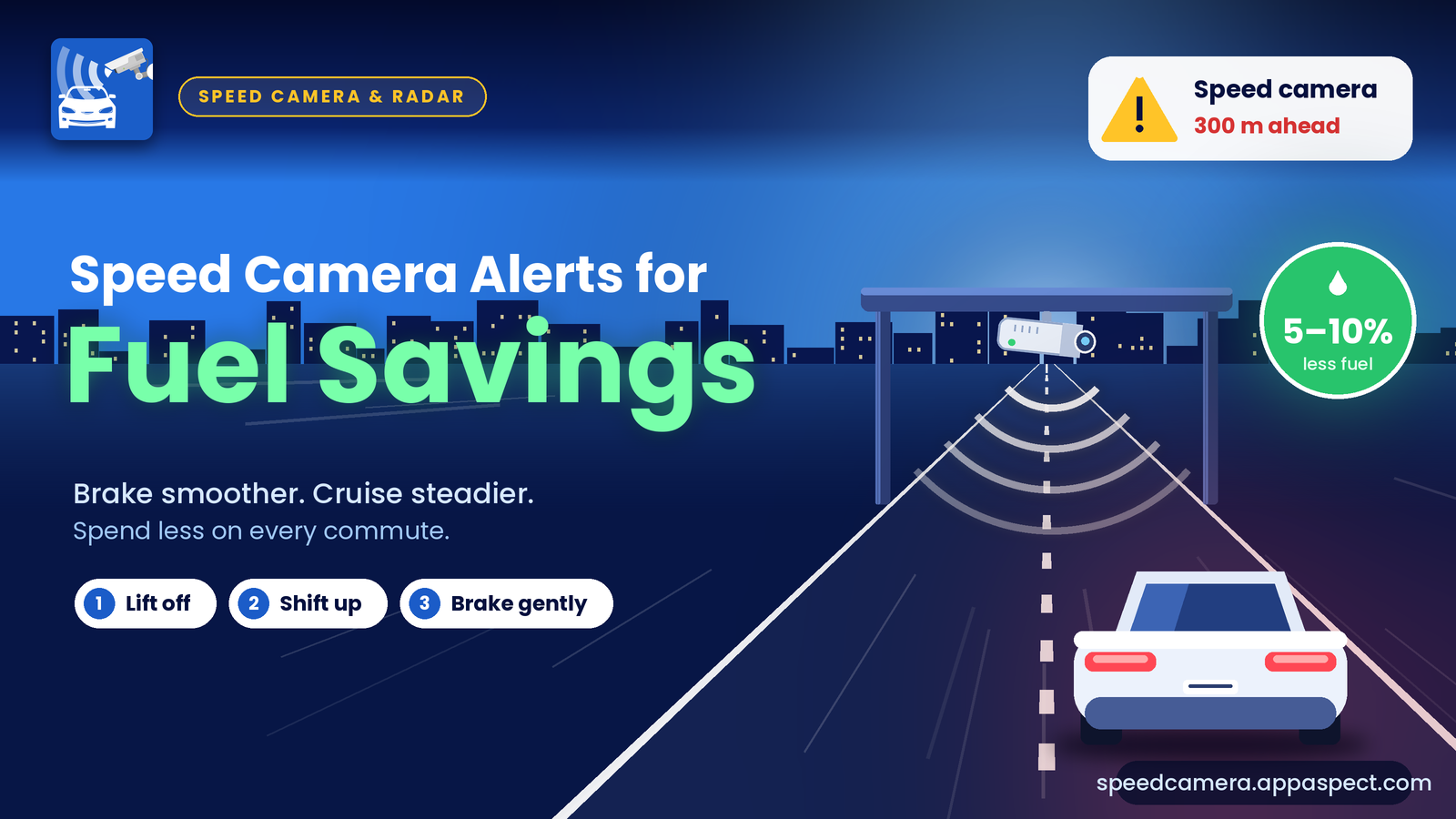
Exact savings vary by vehicle and driving conditions, but studies on smoother driving patterns show fuel reductions of 5-10 % when drivers consistently avoid abrupt speed changes. Applying alerts across a typical commuter schedule can therefore translate into noticeable cost savings over time.
Conclusion
Speed camera alerts fuel savings are more than a traffic-law convenience; they are a lever for measurable fuel-economy improvement. By embracing real-time warnings, planning smarter routes, and using a smart speedometer, commuters can drive smoother, spend less on fuel, and still stay within legal speed limits.
Get Started with Speed Camera & Radar
Ready to turn every alert into a fuel-saving opportunity? Speed Camera & Radar provides the GPS-based warnings, smart speedometer, and route intelligence you need to make eco-driving effortless. Visit the official site, enable alerts on your daily routes, and start seeing fuel savings on your next commute.
Further Reading
- Eco-driving techniques - Overview of driving habits that improve fuel efficiency.
- Vehicle telematics and alerts - Government perspective on telematics for safety and efficiency.
- Fuel consumption tips for commuters - Official energy-department guidance on reducing fuel use.
- Traffic safety apps - General information on how apps contribute to road safety.